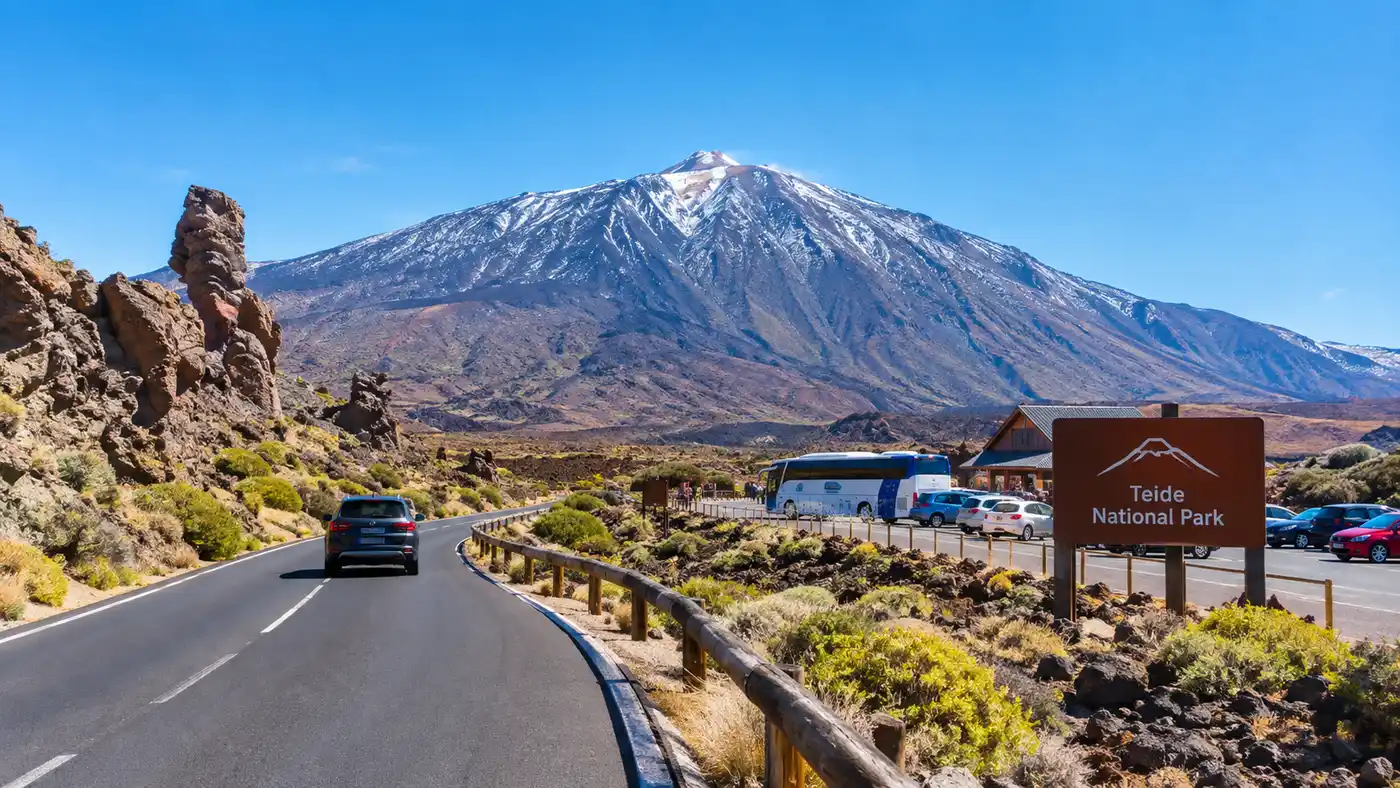
How to Get to Teide National Park: Driving, Bus, and Parking
You can see the volcanic peak from your airplane window long before touchdown, but figuring out how to get to teide national park on ground level is usually the first real puzzle. The park sits roughly 2,000 meters above the sea in the heart of Tenerife. Getting up there means leaving the warm beaches behind and ascending through thick laurel and pine canopies until the trees vanish, replaced by rust-red volcanic wasteland.
Most visitors either hire a rental car or catch one of the public buses run by TITSA. Both methods work well, though each has its own quirks. Driving gives you complete freedom to stop at quiet viewpoints and linger past sunset, while the bus saves your nerves on sharp mountain switchbacks. This guide breaks down the four driving approaches, public transit schedules, parking bottlenecks, and road rules you should know before ascending.
Book your teide national park experience:
Driving to Mount Teide: The Four Main Mountain Routes
Can you drive through Teide National Park without a tour? Yes, entirely. In fact, doing a self drive Teide National Park route is one of the greatest road trips in Spain. Well-paved highways cross the caldera floor, connecting the northern and southern coasts. You do not need an off-road 4x4. Any regular compact rental car handles the asphalt easily, provided you know how to drop into a lower gear on steep inclines.
Four primary roads climb the volcano from different corners of the island. If you start from the south, leaving Playa de las Americas or Costa Adeje to Teide National Park, your path is the TF-21 through Vilaflor. Vilaflor is Spain's highest village, sitting at 1,400 meters. The road winds through dense pine groves before breaking through the rim at Boca Tauce. It is smooth, scenic, and heavily traveled.
From the north, the Puerto de la Cruz to Teide National Park drive follows the opposite end of that same TF-21. You wind upward through the green Orotava Valley, entering the national park near El Portillo. It often takes you right through the cloud layer, which can be disorienting for twenty minutes until you punch out above the sea of white into crisp sunshine.
The western approach via the TF-38 leaves from Chío, offering wide black lava fields from the 1909 Chinyero eruption. It tends to carry less traffic than the Vilaflor road. Lastly, the TF-24 spine road leads down from La Laguna and Santa Cruz de Tenerife to Teide National Park. It runs along the high mountain ridge with dramatic drop-offs on either flank, giving you views of both sides of Tenerife at once.
| Starting Point | Primary Road | Travel Distance | Average Drive Time |
|---|---|---|---|
| Costa Adeje / Los Cristianos | TF-21 via Vilaflor | 48 km | 55 to 65 minutes |
| Puerto de la Cruz | TF-21 via La Orotava | 41 km | 60 to 75 minutes |
| Los Gigantes / Guía de Isora | TF-38 via Chío | 44 km | 50 to 60 minutes |
| Santa Cruz de Tenerife | TF-24 via La Esperanza | 62 km | 80 to 95 minutes |
| Golf del Sur | TF-51 / TF-21 via Vilaflor | 52 km | 65 to 75 minutes |
Pro tip: Fill your tank before heading into the pine forests. There is only one solitary petrol station inside the caldera, located near the Parador, and fuel prices there run roughly 15 to 20 cents higher per liter than on the coast.
Drive Times and Teide National Park Access Safety
Drive times in Tenerife deceive people constantly. You might look at a map and think 45 kilometers takes half an hour. It will not. Mountain roads here feature hundreds of blind curves, steep grades, and cyclists pedaling at walking pace around hairpin bends. The drive time Costa Adeje to Teide National Park is around an hour, but an oversized delivery truck or slow tourist bus can easily add 20 minutes to that journey.
Coming from the northeast, San Andres Tenerife to Teide National Park driving time stretches past 1 hour and 40 minutes. You have to thread through the suburbs of Santa Cruz before tackling the TF-24 ridge road. If you stay on the north coast, the driving time Puerto de la Cruz to Teide National Park averages roughly an hour and ten minutes, assuming you do not get stuck behind a tour group bus climbing the Orotava slopes.
High altitude demands extra care for your vehicle. Compact cars with tiny 1.0-liter engines struggle on the way up, particularly when you run air conditioning. Switch the AC off if you notice the temperature gauge creeping upward. On the way down, rely heavily on engine braking. Shift down into second gear instead of riding your brakes for 30 kilometers, or you will smell your brake pads cooking before you even reach the lower villages.
Winter brings surprising conditions. Snowfalls happen between December and March, occasionally shutting down the TF-21 and TF-24. You should monitor the Teide weather and live webcams before climbing to confirm the park gates remain open. When ice forms, the island council enforces strict Teide National Park vehicle restrictions, barring normal cars without snow chains from entering the high plateau.
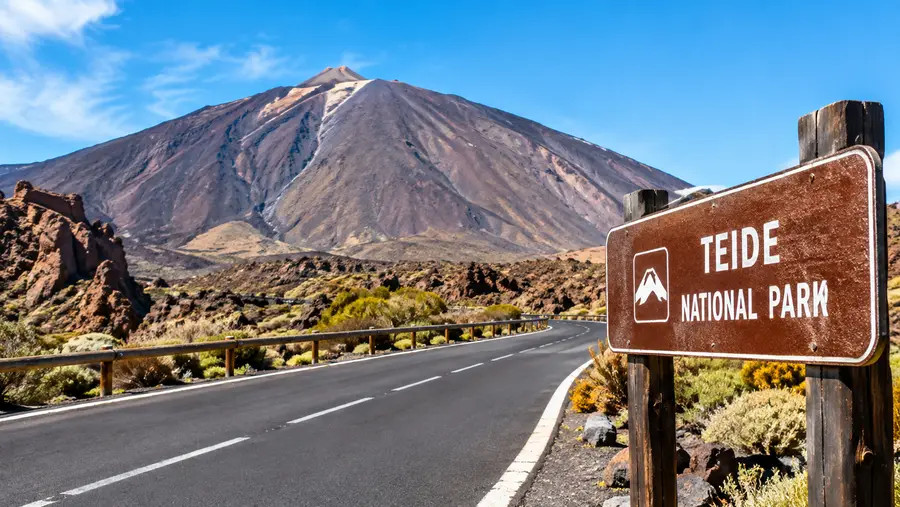
How to Get to Teide National Park by Bus
Taking the public bus to Teide National Park is cheap, clean, and remarkably punctual. TITSA operates two dedicated high-mountain routes that bring hikers and sightseers right into the center of the park. The fare costs less than €7 each way, which you can pay with an ordinary contactless debit card or the local Ten+ transport card.
The southern service is Line 342. This bus from Los Cristianos to Teide National Park leaves early in the morning, stops at Costa Adeje, climbs through Vilaflor, and terminates at the Portillo Visitor Center. If you stay anywhere along the southern strip, from Playa de las Americas to Teide National Park, this is your direct ride.
The northern equivalent is Line 348, which links Puerto de la Cruz to Teide National Park. It leaves from the main bus station in Puerto de la Cruz, passes through the old streets of La Orotava, and follows the northern scenic route directly up into the caldera.
Note: Missing the afternoon return bus leaves you stranded at 2,000 meters with spotty mobile coverage. Mountain taxis down to the coast routinely cost over €90, assuming you can convince an operator in the valley to send a driver up.
The single massive drawback to visiting Teide National Park by bus is the rigid timetable. There is only one trip up per day, and exactly one trip down in the afternoon. You cannot sleep in, and you cannot hang around for twilight.
- Line 342 (South departure): Leaves Costa Adeje station around 9:15 AM, passing Los Cristianos around 9:30 AM, arriving at the cable car around 11:15 AM.
- Line 342 (South return): Departs El Portillo at 3:15 PM and reaches the Teide cable car stop at 3:40 PM for the descent.
- Line 348 (North departure): Departs Puerto de la Cruz bus station at 9:30 AM, hitting El Portillo around 10:50 AM and the cable car at 11:05 AM.
- Line 348 (North return): Leaves the cable car base around 3:55 PM, heading back down through La Orotava.
Book your teide national park experience:
Teide National Park Car Parking Reality
Parking inside the park can be an absolute headache. The roads are wide and empty, but the designated parking bays at major highlights are surprisingly small. The Spanish national park service strictly bans pulling onto the volcanic dirt along road shoulders. Park rangers patrol constantly, and fines for crushing protected vegetation exceed €100.
The most congested location is the base station for the Mount Teide cable car. The official parking lot holds roughly 220 vehicles. By 9:45 AM on sunny days, every slot is full. Cars begin circling aimlessly, tempers fray, and people end up missing their pre-booked ascent windows. If you do not have morning cable car tickets, avoid this specific lot entirely between 10:00 AM and 2:00 PM.
Other areas offer slightly easier turnover. The parking area across from the Parador hotel and the Roques de García viewpoint is larger, though it still packs out around midday. The key to stress-free parking is understanding where spots turn over quickly versus where cars sit parked all day.
- Cable Car (Teleférico): Arrive before 9:15 AM or arrive after 2:30 PM when the morning crowds clear out.
- Roques de García (Mirador de la Ruleta): Quick turnaround because many tour buses only stay twenty minutes; patient drivers find a spot within ten minutes.
- El Portillo Visitor Center: Ample parking, clean restrooms, informative trail maps, and rarely full to capacity.
- Mirador de Chío / Narices del Teide: Smaller pull-offs along the TF-38 road, perfect for watching sunsets over La Gomera with easy parking.
If you punch a navigation query into your smartphone, the official Mount Teide National Park address usually directs you to the central visitor facilities: TF-21, Km 43, 38300 La Orotava, Santa Cruz de Tenerife. Be careful trusting Google Maps blindly inside the caldera. Download offline maps before leaving your coastal hotel, as cellular data frequently drops to zero between the volcanic ridges.
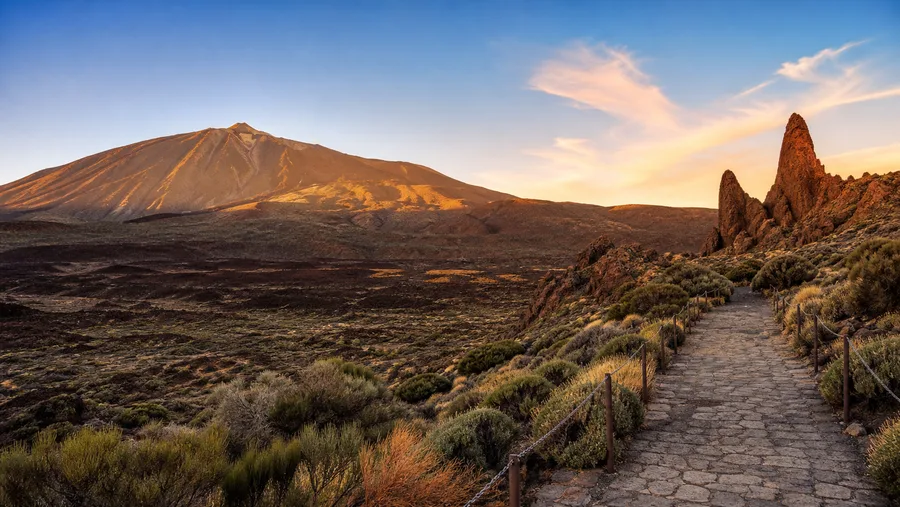
Choosing Between Self Drive, Buses, and Group Shuttles
I think the ideal method comes down to what you want out of your day. Renting a car gives you control over the clock. You can stop at small roadside bakeries in Vilaflor, walk five different nature trails, stay late for the milky way, and head home in total quiet.
Public transit suits travelers who hate mountain driving. Some drivers feel real anxiety when hugging sheer barriers on narrow roads, especially with impatient locals tailgating their bumper. The TITSA buses sit high off the ground, provide massive panorama windows, and cost less than half a tank of gas. You lose schedule flexibility, but you gain peace of mind.
Group shuttles and organized vans sit in the middle. They pick you up at southern resorts like Golf del Sur or Costa Adeje, handle navigation, drop you at the cable car, and take you back down. It costs more than the bus, but you will not stress over parking tickets or missed return trips.
Frequently Asked Questions about how to get to teide national park
What is the official Teide National Park address for navigation?
The standard reference address for the park's central hub is TF-21, Km 43, 38300 La Orotava, Santa Cruz de Tenerife, Spain. Most drivers simply set their navigation systems directly to the Teleférico del Teide or the Portillo Visitor Center.
Can you drive through Teide National Park at night?
Yes, the public roads through the national park remain open 24 hours a day throughout the year, unless heavy winter snow or fallen boulders cause temporary safety closures. Night driving is peaceful, but keep your eyes peeled for stray rocks and local wildlife along the edges.
How much is the bus from Costa Adeje to Teide National Park?
TITSA Line 342 costs approximately €6.20 each way when paid with a standard contactless bank card or the local Ten+ transit card. Cash is generally discouraged on mountain express routes.
Is parking free in Teide National Park?
Yes, public car parking at the viewpoints, visitor centers, and the cable car base station is entirely free of charge. However, slots fill up quickly during peak hours between 10:00 AM and 2:00 PM.
How long is the drive from Puerto de la Cruz?
The drive takes roughly 60 to 75 minutes along the TF-21 road through La Orotava, covering approximately 41 kilometers of winding mountain terrain.
Quick Reference
- TF-21 links the park directly to both Costa Adeje and Puerto de la Cruz.
- Public bus lines: 342 (South) and 348 (North) run once daily.
- Cable car parking fills by 9:30 AM on clear mornings.
- Gas up before climbing; only one high-priced station exists in the caldera.
Book your teide national park experience:
Before You Hit the Road
A trip up Mount Teide is usually the highlight of any Tenerife holiday. Do not rush the trip. Plan an entire morning or afternoon, pack a warm jacket even if your hotel pool reads thirty degrees, and leave early enough to beat the parking madness. Whether you choose to take the local TITSA bus or pilot a small rental car through the clouds, the road up will stick in your memory long after you fly home.
Read more about teide national park.