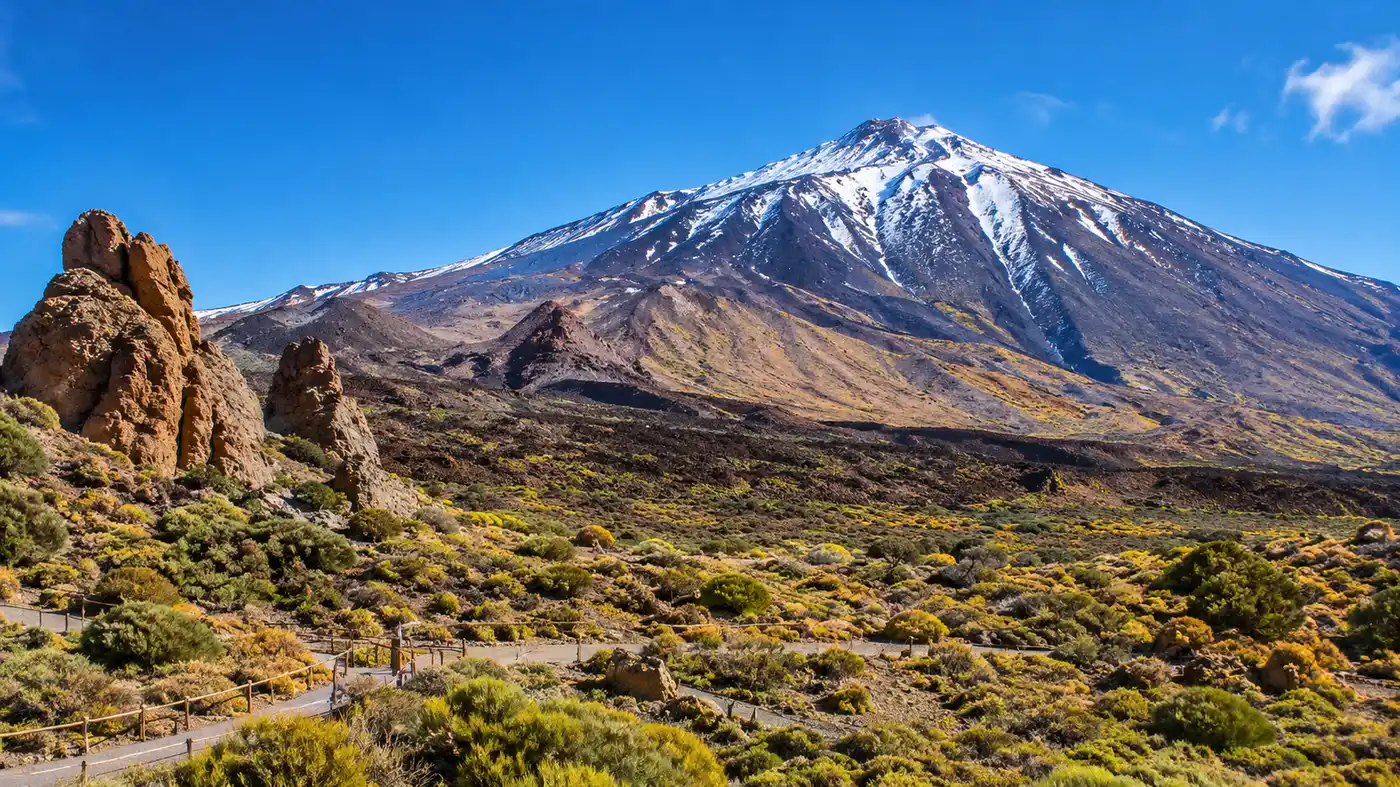
Mount Teide Weather, Live Webcams, and Snow Forecast
You can be floating in an ocean pool in Los Gigantes at 24 degrees, look up at the mountain, and realize people are freezing in heavy parkas up there. The microclimates on Tenerife are dramatic. Checking the teide national park weather before you pack your rental car is the difference between a sublime alpine drive and sitting in an unmoving traffic jam shivering in gym shorts.
The volcano punches straight through the Atlantic cloud bank to reach 3,715 meters above sea level. Down by the resorts, the climate stays remarkably stable year-round, but up on the plateau, conditions flip on a dime. We will look at real-time webcams, seasonal temperature swings, winter snow forecasts, and how to tell if high winds will shut down the lifts before you drive an hour uphill.
Book your teide national park experience:
Understanding Teide Mountain Weather and the Thermal Inversion
Tenerife owes its strange skies to the trade winds. These moisture-laden winds blow in from the northeast, hitting the northern slopes of the island between 800 and 1,500 meters. They bunch up against the rock, creating a dense, puffy sea of clouds known locally as mar de nubes. When you drive up from Puerto de la Cruz or La Laguna, you spend twenty minutes inside a grey, damp mist that feels like a wet November in Scotland. Then, almost violently, your car breaks out of the ceiling into blinding blue sunshine at 2,000 meters.
This is a classic thermal inversion. The moisture is trapped below a layer of dry, warm descending air. Above the cloud sea, the air in Las Cañadas caldera is bone dry, with relative humidity frequently dipping below 10 percent. The sun up here has teeth. Even when the air thermometer shows 8 degrees, the ultraviolet radiation hitting your skin makes it feel ten degrees warmer, at least until the wind picks up or the sun drops behind the rim.
Pro tip: Pack high-SPF lip balm and a mineral sunscreen before heading up. The combination of dry air and fierce high-altitude UV burns exposed skin in about 15 minutes, even when the wind feels icy.
Higher up, weather pico del teide diverges even further from the caldera floor. At the upper station of the lift, you stand at 3,555 meters. Up here, the atmosphere thins significantly. There is less air to hold onto warmth, so temperature teide national park drops roughly 6.5 degrees Celsius for every 1,000 meters of elevation you climb. If it is 26 degrees on the sand in Costa Adeje, it might be 13 degrees at the Parador hotel and a biting 3 degrees up at the summit.
Teide National Park Live Cam Feeds and Real-Time Conditions
Forecasting websites struggle with this volcano. I have lost count of how many times a phone app insisted the mountain was buried under thunderstorms while a live teide webcam showed nothing but empty blue skies above a cotton blanket of clouds. When you want to know what is actually happening right now, visual confirmation via a teide national park live cam is your most reliable tool.
Several institutions maintain round-the-clock cameras facing the peak and across the plateau. The IAC (Instituto de Astrofísica de Canarias) runs high-definition cameras from the Izaña atmospheric observatory at 2,390 meters. Their feeds point west across the caldera toward the main peak, giving an unobstructed look at cloud levels and morning visibility. Volcano Teide, the company operating the lift, broadcasts a continuous mount teide webcam stream from both the base station at 2,356 meters and the top terminal. If you want to check if the trails are iced over, their top camera shows the raw volcanic scree and frost lines clearly.
- Izaña Observatory cameras: Best for checking the cloud sea height and overall visibility across the northern ridge.
- Cable car base station feed: Useful for checking wind flags, parking lot occupancy, and low-lying ground mist.
- Cable car summit webcam: Essential for checking ice, snow patches on the crater slopes, and upper-station cloud cover.
- Parador de Las Cañadas camera: Points south across the caldera floor towards the Roques de García rock towers.
Check the teide national park camera feeds around 8:00 AM on the day you plan to travel. Morning mountain patterns often hold until mid-afternoon, when convection can pull localized clouds up through the southern barrancos. If the mountain is shrouded in dark, towering anvil clouds rather than the flat white sea below, an Atlantic front has rolled in over the top, which usually brings squalls and sudden drops in teide tenerife weather.
Monthly Teide National Park Climate and Seasonal Patterns
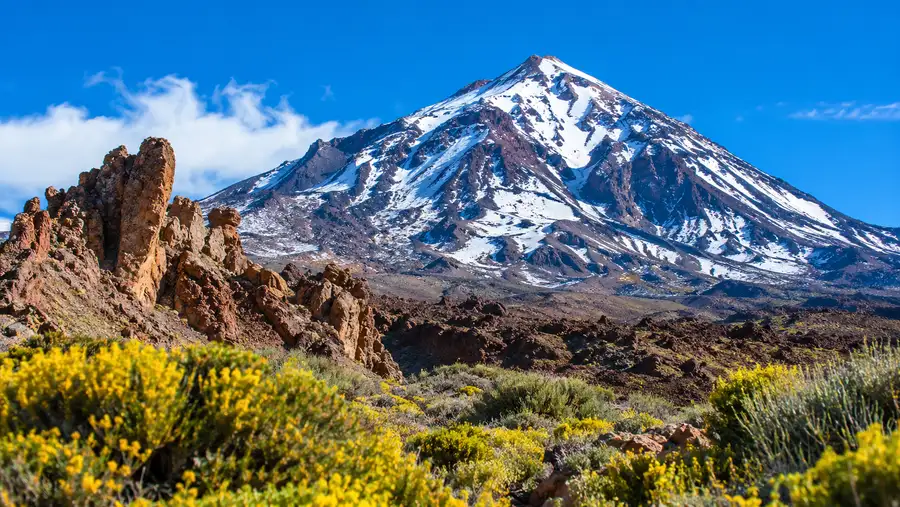
The seasonal transition in the park does not match the coastal rhythm at all. Down on the coast, people swim in December and sunbathe in February. On the volcano, winter is real, sharp, and unforgiving, while summer turns the caldera into a scorched, arid furnace. If you are planning an ascent, consult our Mount Teide Cable Car guide to see how wind and ice cut into daily operating schedules across different seasons.
Summer brings blazing clarity. In July and August, rain is practically nonexistent across the park. Teide national park june to August brings day temperatures that routinely hit 28 to 32 degrees on the caldera floor, though the air stays dry enough that you do not sweat the way you do at sea level. Summer nights cool down swiftly, settling around 10 to 12 degrees, making it ideal for night sky viewing. Calima events - hot, dust-laden winds blowing off the Sahara Desert - hit hardest in summer, turning the sky a flat ochre and pushing temperatures well above 35 degrees at 2,200 meters.
Note: When a severe Calima rolls in, fine suspended dust reduces visibility to a few hundred meters and the dry heat puts tremendous strain on your lungs during steep hikes.
Autumn brings relief from the baking heat. Teide national park climate november marks the real shift into wet season weather. Frost begins to coat shaded rocks overnight, and winds pick up along the high ridges. Winter, covering teide national park january through March, brings freezing storms, rime ice, and regular dustings of snow. During spring, especially May, the caldera blooms with red tajinaste flowers, snow melts rapidly, and daytime temperatures float comfortably around 16 degrees.
| Month | Avg High (Base 2,200m) | Avg Low (Base 2,200m) | Rain/Snow Days | Summit Temp (3,555m) |
|---|---|---|---|---|
| January | 7°C | -1°C | 5 days | -4°C to 1°C |
| March | 10°C | 1°C | 4 days | -2°C to 4°C |
| May | 16°C | 6°C | 2 days | 3°C to 9°C |
| July | 26°C | 14°C | 0 days | 11°C to 18°C |
| September | 21°C | 11°C | 1 day | 7°C to 14°C |
| November | 11°C | 3°C | 5 days | 0°C to 6°C |
Book your teide national park experience:
Snow on Mount Teide, Road Closures, and Winter Storms
Snow on Mount Teide surprises tourists who flew to the Canary Islands expecting year-round tropical warmth. It snows almost every winter, usually starting with light flurries in late November and peaking between January and March. A heavy Atlantic storm system can dump 40 to 60 centimeters of white powder over the plateau in under 36 hours. When this happens, the stark black volcanic malpaís landscape turns into something resembling northern Norway.
The island government acts fast when winter storms strike. The phrase "teide national park is closed due to snowfall in tenerife" is a common headline in local papers like Diario de Avisos between Christmas and mid-February. Black ice forms on the mountain highways because moisture runs across the tarmac and freezes solid as soon as the sun dips. The TF-21 road coming up from La Orotava and the TF-24 spine road from La Esperanza are usually the first to be shut down by the Cabildo de Tenerife road crews.
Teide national park road closures snow decisions are made to prevent cars from sliding off unprotected mountain drop-offs. Most rental vehicles on Tenerife have summer tires with hard compounds that offer zero grip on ice. If snow falls, gates across the access roads close at Vilaflor in the south, Boca Tauce in the southwest, and Aguamansa in the north. If you are staying down south and want to know how the access routes work, our guide on how to get to Teide National Park covers the four main mountain approaches and alternative detours.
Once snow clears and roads reopen, local families pile into their hatchbacks to drive up and build miniature snowmen on their car hoods. It is a long-standing island tradition called ir a la nieve. If you venture up right after a winter snowfall, expect crawling traffic along the TF-21 and zero available parking anywhere near the cable car or Roques de García. Go on a weekday before 9:00 AM if you want to see the snow without sitting in three hours of gridlock.
Wind, Cable Car Shutdowns, and How to Check the Forecast
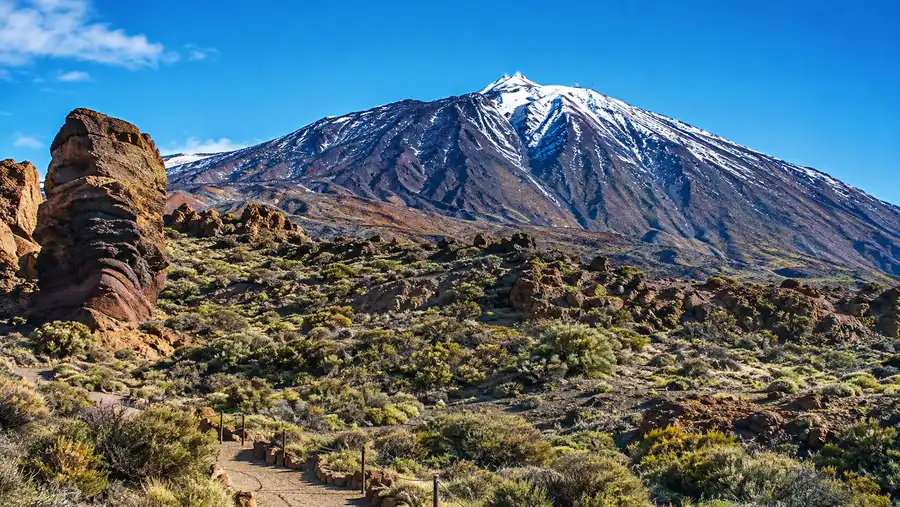
Wind is the true dictator of activities on the volcano. The cable car cannot run safely in sustained gusts over 45 to 50 kilometers per hour. Down in the caldera at base level, you might feel a pleasant, gentle breeze, while 1,200 meters higher at La Rambleta, 70 km/h wind shear is screaming off the rocks. I have seen dozens of travelers arrive at the ticket desk thoroughly bewildered because their weather app showed clear sunshine, yet the cabins were pinned to the ground.
General weather portals like bbc weather teide national park or generic phone widgets average out conditions across huge geographic cells. They routinely mix sea-level temperatures from Puerto de la Cruz with the mountain summit, showing bizarre estimates like 19 degrees for the peak in the middle of January. Instead of relying on mass-market apps, check these specific sources before your trip:
- AEMET (Agencia Estatal de Meteorología): Spain's official weather service provides dedicated mountain forecasts for high summits, specifically breaking down wind speeds and zero-degree isotherm heights for Teide.
- Mountain-Forecast.com: Excellent site that splits its teide peak weather predictions into three distinct elevations: 2,200m, 3,000m, and the 3,718m peak.
- Volcano Teide official website: Their main dashboard updates every morning between 7:30 AM and 8:30 AM with a green, yellow, or red status light for lift operations and open trail networks.
- Windy.com: Switch the forecast model to ECMWF or ICON-EU and slide the altitude slider to 3,000 meters to see real atmospheric wind currents across the Canary archipelago.
If you have summit permits booked, wind is your biggest gamble. Even on a completely cloudless morning with bright sunshine, upper-level jet stream ripples can force park rangers to close Trail 10 leading to the crater. If you see high wind warnings on AEMET for the central peaks, have a backup hike planned on the caldera floor, such as the Chorreras or Samara trails, where the high crater rim blocks the worst of the northern gales.
Frequently Asked Questions about teide national park weather
How cold does it get at the top of Mount Teide?
Temperatures at the summit station (3,555 meters) regularly sit between -4°C and 4°C during winter months. In the summer, midday summit temperatures reach 12°C to 18°C, but strong winds can make the wind chill feel well below freezing at any time of year.
Does it snow in Teide National Park every year?
Yes, snow falls in the park during almost every winter season, typically between December and March. Some years see just two or three light snowfalls that melt within 48 hours, while heavier winter storms can leave snow on the shaded northern slopes well into April.
Why is the Teide cable car closed if the weather looks clear?
The cable car is suspended on high cables exposed to crosswinds. High winds aloft often exceed 50 km/h even when the sky is completely clear and the weather at the base station feels calm, forcing operators to halt the cabins for safety.
What clothes should I wear to visit Teide in the winter?
Dress in warm layers: thermal base layers, a fleece or wool mid-layer, a windproof and waterproof outer jacket, sturdy closed shoes, a warm beanie, and gloves. Running shoes and light summer sweaters are never sufficient above 2,000 meters between November and April.
Is Teide National Park open when it rains?
The park itself remains open during normal rain, but heavy downpours, rockfalls, or ice can lead authorities to close specific mountain access roads. Rain at sea level often means snow or ice on the caldera access passes.
Quick Reference
- Summit altitude: 3,715 meters
- Average caldera winter temp: 7°C day, -1°C night
- Average caldera summer temp: 26°C day, 14°C night
- Cable car wind shutdown threshold: roughly 50 km/h
- Peak snow months: January through March
Book your teide national park experience:
Before You Go
Never judge the mountain by the palm trees outside your hotel window. Tenerife is small on a map, but climbing into Las Cañadas puts you in a genuine high-alpine environment where conditions change in twenty minutes. Pull up the live webcam feeds while having your morning coffee, check the wind aloft forecasts on AEMET, and stash an extra fleece in your trunk even if you plan to spend the afternoon on the beach. Respecting the volcano's weather is the easiest way to make sure your trip up the mountain is unforgettable for the right reasons.
Read more about teide national park.